

The arrested individual will be detained until the court decides the future proceedings. Based on the charges filed against the accused and the rules in place in his area, the court could order release on bond. How do I post bail? First, find out how much money will be required for posting bail. Next, find out whether the process requires paying cash or securing a bail bond. Finally, submit all the necessary details and make the payment. Understanding the process can make posting bail after arrest easier and help avoid unnecessary delays.
How Do I Post Bail for Someone After an Arrest?
To determine how to post bail after an arrest, it is crucial to know precisely where the individual is being detained. It is vital to note that processes related to posting bail may vary depending on location; it is recommended to receive clarification regarding this procedure from the relevant institution.

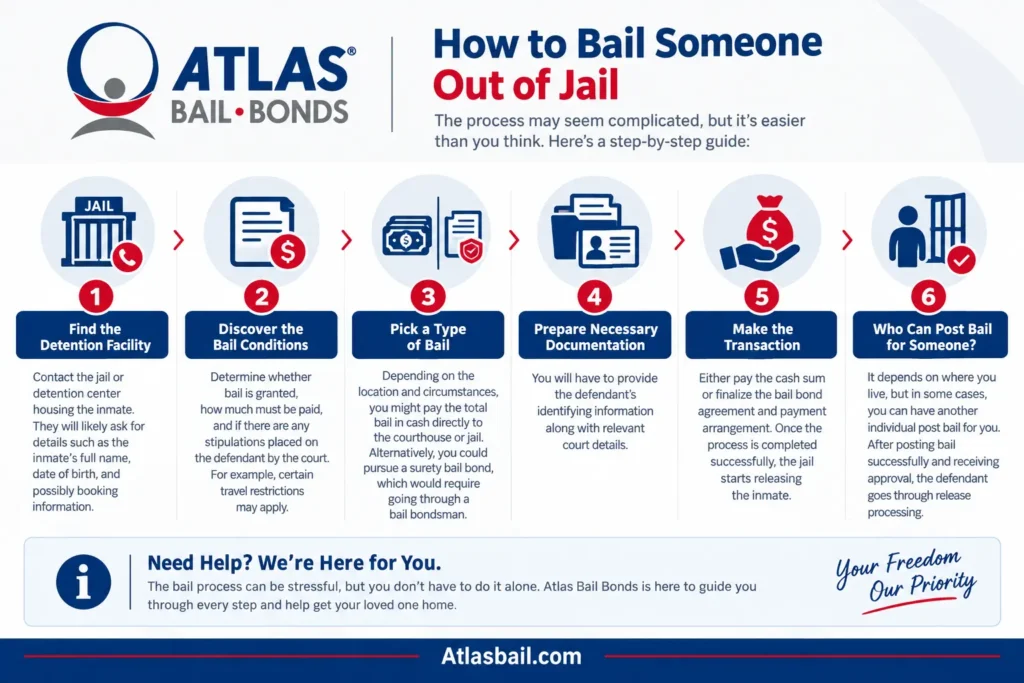
The following outline describes the basic process of how to bail someone out of jail:
Find the detention facility: Contact the jail or detention center housing the inmate. They will likely ask for details such as the inmate’s full name, date of birth, and possibly booking information.
Discover the bail conditions: Determine whether bail is granted, how much must be paid, and if there are any stipulations placed on the defendant by the court. For example, certain travel restrictions may apply.
Pick a type of bail: Depending on the location and circumstances, you might pay the total bail in cash directly to the courthouse or jail. Alternatively, you could pursue a surety bail bond, which would require going through a bail bondsman.
Prepare necessary documentation: You will have to provide the defendant’s identifying information along with relevant court details.
Make the transaction: Either pay the cash sum or finalize the bail bond agreement and payment arrangement. Once the process is completed successfully, the jail starts releasing the inmate.
Who can post bail for someone? It depends on where you live, but in some cases, you can have another individual post bail for you. After posting bail successfully and receiving approval, the defendant goes through release processing.
What Are the Requirements to Post Bail?
The specific bail bond requirements depend on the jurisdiction, court, type of bond, and circumstances of the case. Verify the necessary documentation prior to payment through the jail, courthouse, or authorized bail bond company.
- Identification for defendant: Legal name, birth date, booking number, and additional personal identifiers could be requested.
- Bail/court information: Specific details might consist of total bail costs, case number, physical address of court, and other pertinent considerations.
- Information about co-signer: For surety bonds, an agreement between a co-signer and the bonding agency may occur.
- Documentation for transactions: Documents can range anywhere from forms of ID to payments or signatures on papers.
Who can post bail for someone? Rules vary. In some places, you might be able to post cash bail for a friend or family member yourself. For a bail bondsman, however, there will be different criteria for co-signing a bail bond contract.
How Much Does It Cost to Post Bail?
If you’re wondering how much bail costs, there is no single amount that applies to every arrest. Bail bonds will also differ significantly from those rates established by the court.
Bail amount vs bond premium: The bail amount is the sum of money that the court requires for the release of a defendant. The bail bond premium is the charge associated with posting a surety bond and usually represents a small percentage of the overall bail amount.
Cash bail: In cases involving cash bail, the necessary sum is deposited as specified by the court or jail. Assuming that the defendant adheres to the pertinent requirements laid out by the court, the money can be refunded in accordance with relevant regulations; however, some additional charges might be incurred.
Surety bail bond: The issuance of a bail bond involves using the services of a bond agency to provide a guarantee on behalf of the defendant. Instead of paying the full amount, the person securing the bond will only have to pay a certain premium.
Other expenses or collateral: There may be other administrative fees or collateral involved in a particular case depending on the bond agreement and location.
Bail bond payment plan: Payment alternatives exist for eligible individuals seeking to acquire a surety bond. Bail bond payment options can vary based on the provider, jurisdiction, bond amount, and individual circumstances.
Knowing the bail bond process before paying money can allow you to decide whether or not the bail system makes financial sense for your situation.
Cash Bail vs Bail Bond
Learning about cash bail vs bail bond will enable one to make the right decision based on circumstances. Cash bail involves paying the set monetary amount to the court or detention facility where an arrest has been made. If all requirements are fulfilled according to local regulations, then it might be possible to recover this amount.
Surety bail bond, on the other hand, refers to the bail bond process where the agent pays the set amount on behalf of the defendant.
| Feature | Cash Bail | Surety Bail Bond |
|---|---|---|
| Upfront Payment | Usually requires the full bail amount | Usually requires a percentage of the bail amount |
| Payment Recipient | Court or jail | Bail bond provider |
| Refund | May be refundable if conditions are met | Premium is generally non-refundable |
| Collateral | Usually not required | May be required |
| Suitable For | Those who can pay the full bail amount | Those who prefer not to pay the full amount upfront |
How Long Does It Take to Post Bail?
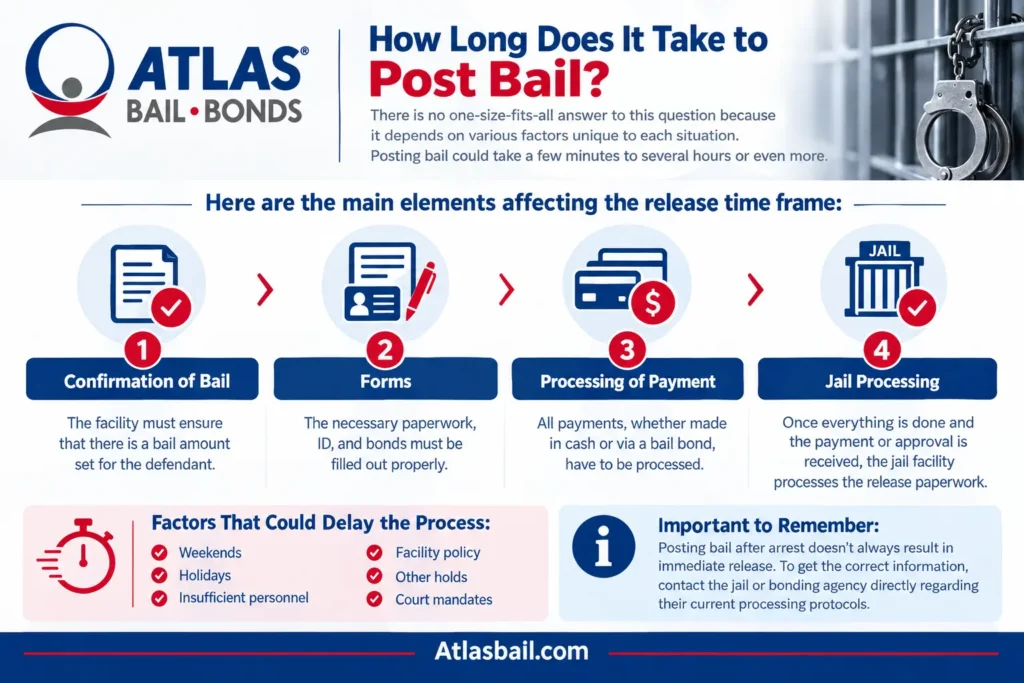
How Long Does It Take to Post Bail? There is no one-size-fits-all answer to this question because it depends on various factors unique to each situation. Posting bail could take a few minutes to several hours or even more.
Here are the main elements affecting the release time frame:
Confirmation of bail: The facility must ensure that there is a bail amount set for the defendant.
Forms: The necessary paperwork, ID, and bonds must be filled out properly.
Processing of payment: All payments, whether made in cash or via a bail bond, have to be processed.
Jail processing: Once everything is done and the payment or approval is received, the jail facility processes the release paperwork.
Various factors could delay the process, including weekends, holidays, insufficient personnel, facility policy, other holds, or court mandates. Posting bail after arrest doesn’t always result in immediate release. To get the correct information, contact the jail or bonding agency directly regarding their current processing protocols.
Frequently Asked Question (FAQ)
How do I post bail after someone is arrested?
Make sure you know how much bail must be paid and under what conditions. Pay cash bail directly or secure a bail bond from a licensed agent.
Can I post bail for someone else?
Yes. It is often possible for friends or relatives, among others qualified to do so, to post bail for someone else.
How much does it cost to post bail?
This will depend on the total bail set by the court, plus any additional costs for processing cash bail versus a bail bond.
How long does it take to get someone released after bail is posted?
It differs depending on each facility. Depending on the process, this could happen quickly or after some time.
How do I find out who posted bail for someone?
Reach out to the appropriate agency or facility to inquire if there is any public record showing who has posted bail.

Author Bio
Julianna Morgan and Ethel Rangel are co-owners of AAA Atlas Bail Bonds, a family-owned Texas bail bond company that has been helping families navigate the bail process since 2009. Together, they have years of hands-on experience assisting clients with jail releases, bail bond requirements, court procedures, payment options, and the complexities of the Texas criminal justice system.
Through their work serving Dallas, Irving, Farmers Branch, Denton, and surrounding communities, Julianna and Ethel have helped thousands of families during difficult situations. They are committed to providing accurate, practical, and easy-to-understand information about bail bonds and the jail release process in Texas.
Reviewed By Statement
Co-Owners, AAA Atlas Bail Bonds
This article was reviewed by Julianna Morgan and Ethel Rangel, co-owners of AAA Atlas Bail Bonds, to help ensure the information is accurate and relevant to Texas bail bond clients.
Disclaimer
The information provided in this article is for general informational purposes only and should not be considered legal advice. Bail laws, court procedures, and regulations may change and can vary by jurisdiction. For legal advice regarding your specific situation, consult a licensed attorney. For questions about bail bonds or jail release services in Texas, contact AAA Atlas Bail Bonds directly.